A
dental implant is a small titanium screw that mimics the relationships between the root of a tooth and your jawbone. Once the dental implant is in place, it serves as the anchor component of a prosthesis. At
Edmonds Dental Studio, we also offer mini dental implants for patients who do not qualify for conventional restoration methods.
What Are Mini Dental Implants?
As the name suggests, a mini dental implant (MDI) has the same structure as a regular dental implant, but in a slightly smaller form. According to the
Journal of Oral Implantology, a regular implant can be between 3.4 and 5.8 millimeters wide, while an MDI is 1.8 to 3.3 mm in diameter.
Unlike regular-sized implants that require multiple surgeries and appointments, mini dental implants expedite the treatment process.
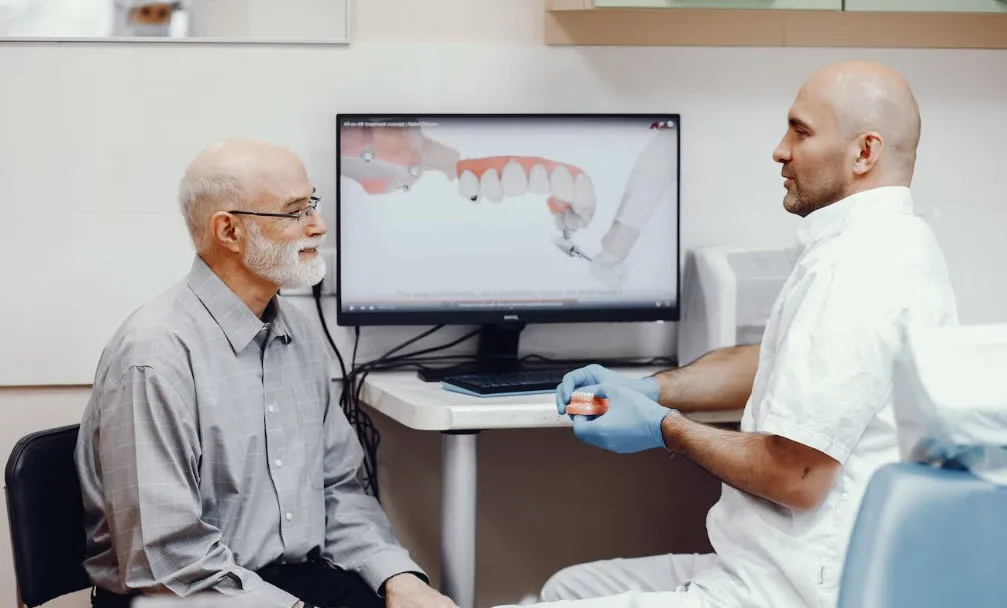
Dr. Hasan Dbouk can place a mini implant in a single appointment during a minimally invasive procedure. The design and structure of a mini implant promotes a fast healing period and long lasting results. These advantages allow us to place a restoration the same day as your procedure, usually a denture or
overdenture.
MDIs also eliminate the need for bone grafting, even if you have experienced severe bone deterioration. Regular dental implants require a significant amount of bone in the jaw due to the process of osseointegration. Patients with less jawbone are less likely to qualify for regular implants.
Who Qualifies for Mini Dental Implants?
We usually recommend mini dental implants to patients who currently use removable dentures. MDIs can be used to stabilize your existing denture, especially if you are experiencing frequent irritation and embarrassing slips. The mini implants allow your denture to rest comfortably on the gum tissues while withstanding the forces of your bite.
MDIs are also ideal for patients who are unwilling to undergo more extensive oral surgery. In most cases, mini implants involve a minor procedure with little discomfort and no sutures. Talk with Dr. Hasan Dbouk to learn more about your implant options.
Advantages of Mini Dental Implants
Mini dental implants are not recommended for single tooth replacement. They are most useful in supporting a full-arch restoration such as a denture. We may also recommend them for a partial bridge. While they are not as strong as regular implants, they still possess some advantages, which include:•
Minimally invasive procedure: Most implant procedures are split into two surgeries, one to place the implant and one to place the abutment. A mini dental implant (and your restoration) can be placed within a single appointment, and without the need for extensive surgery.
•
Improve an existing restoration: In most cases, MDIs are used to retrofit an existing denture. This can save you a significant amount of time and money.
•
Cost-effective: Because they are smaller, mini implants are less expensive. They also save you multiple trips to our office.
•
Improved appearance: All types of implants can reduce the look of a sunken face that occurs after tooth loss. Your restoration should also be virtually-distinguishable from natural teeth.
•
Improved function: When compared to a removable appliance, MDIs can make eating and speaking much easier. The implants will improve the security and durability of your restoration.
Schedule a Consultation
If you are around Edmonds, WA, find out if mini dental implants are right for you! Call
(425) 775-1045
to schedule a consultation today!