What Is Periodontal Disease? Edmonds, WA

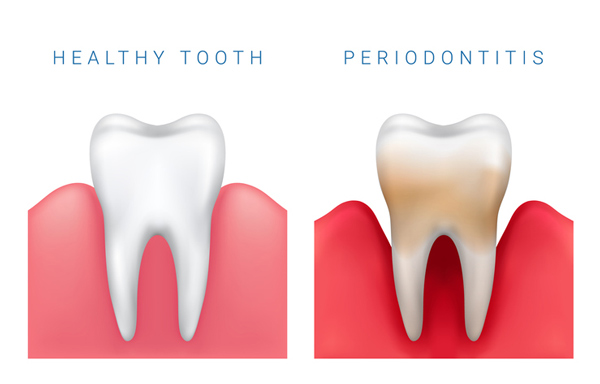
Diagram of healthy tooth compared to periodontitis diseased tooth at Edmonds Dental Studio in Edmonds Washington.When most people think of a beautiful smile, they think about white teeth free of decay. However, your gums are equally important to your oral health, both aesthetically and functionally. For this reason, periodontal (gum) disease is a serious oral health issue that can drastically affect your smile. Not to worry, since Dr. Hasan Dbouk is here to help. At Edmonds Dental Studio, we specialize in the prevention, diagnosis, and treatment of periodontal disease because we want our patients to maintain a healthy, dazzling smile!

Gingivitis

The first and most common form of periodontal disease is known as gingivitis. This beginning stage of the disease is characterized by gums that are swollen and red. Unfortunately, the symptoms of gingivitis are subtle and progress slowly. If you suffer from gingivitis, your gums may also bleed easily during brushing and flossing. Luckily, gingivitis is easy to treat and reverse with improvements to your daily oral hygiene routine. Regular flossing can get your gums back to a healthier state relatively fast. If gingivitis is left unchecked, it will ultimately progress to the second stage of gum disease, periodontitis.

Periodontitis

Periodontitis is a much more serious and detrimental form of gum disease. At this stage, your gums will begin to recede, and the infection will spread to your connective ligaments and underlying bone. Periodontitis also causes deep periodontal pockets, spaces between your teeth, and gums that can trap food debris and bacteria. Eventually, periodontitis will cause irreversible damage to your tissues, increasing your risk of tooth loss. Periodontal disease is the leading cause of tooth loss in the United States.

What Causes Periodontal Disease?

Much like tooth decay, periodontal disease is caused by the harmful bacteria found in plaque, the sticky biofilm on our teeth. When plaque is allowed to build up, our immune system produces toxins to combat bacteria. Unfortunately, these toxins also target healthy tissues, causing the infection we refer to as periodontal disease. The infection starts with the gums. It then spreads to all tissues that support your teeth. Without treatment, it will likely cause tooth loss for one or more teeth.

Treating Advanced Periodontal Disease

As a periodontist, Dr. Hasan Dbouk specializes in treatments designed to prevent or reverse the effects of periodontal disease. While some of the damage to your tissues may be irreversible, our treatments can still get your periodontal health back on track. One of the most common treatments for advanced periodontal disease is a procedure known as a scaling and root planing. A scaling and root planing is similar to a conventional cleaning. During the procedure, we use an ultrasonic scaler to eliminate plaque and tartar (calcified plaque) from the surfaces of your teeth. Next, we smooth out any rough surfaces on your roots to prevent plaque, tartar, and bacteria from re-adhering below the gum tissues. This process is extensive and may require more than one appointment, depending on the severity of your periodontal disease. After your scaling and root planing, your gums should return to a pink, healthy state. Healthy gums also fit snugly around each tooth. To prevent a reoccurrence, be sure to implement a strong oral hygiene that includes daily flossing.

Schedule Your Appointment Today!

Maintaining proper periodontal health is one of the best ways to protect your smile! Call (425) 775-1045 to schedule your appointment today!

Why Periodontal Care Matters

Benefits of Treating Gum Disease

Periodontal disease begins when plaque bacteria irritate the gums and, if left unchecked, advances from gingivitis to periodontitis — spreading to the ligaments and bone that hold your teeth in place. Diagnosing and treating it early helps protect both the appearance and the long-term function of your smile.

Helps Prevent Tooth Loss

Periodontal disease is the leading cause of tooth loss in the United States. Treating the infection helps protect the gums, ligaments, and bone that keep your teeth secure.

Reverses Early Gum Disease

Caught at the gingivitis stage, gum disease is usually reversible. A professional cleaning combined with better daily hygiene can return swollen, bleeding gums to a healthier state.

Deep Cleaning Below the Gumline

Scaling and root planing removes plaque and hardened tartar from the roots and smooths those surfaces, making it harder for bacteria to re-adhere beneath the gums.

Restores Healthy, Snug Gums

After treatment, gums can return to a pink, healthy state that fits snugly around each tooth. Ongoing hygiene and regular checkups help keep periodontal disease from returning.

Common Questions

Periodontal Disease FAQ

Common signs include gums that are red, swollen, or tender, bleeding while brushing or flossing, persistent bad breath, and gums that appear to be pulling away from the teeth. In more advanced stages you may notice deep pockets between the teeth and gums, or teeth that feel loose. Because early gum disease often has subtle symptoms, regular dental checkups are the most reliable way to catch it.

Gingivitis is the earliest stage of gum disease and is generally reversible. With improvements to your daily oral hygiene routine, including regular brushing and flossing, and a professional cleaning to remove plaque and tartar, the gums can often return to a healthier state. Left untreated, gingivitis can progress to periodontitis, which causes irreversible damage to the supporting tissues and bone.

Scaling and root planing is a deep-cleaning procedure used to treat advanced periodontal disease. An ultrasonic scaler removes plaque and hardened tartar from the tooth surfaces, including below the gumline, and the tooth roots are then smoothed so that plaque, tartar, and bacteria are less able to re-adhere. Depending on the severity of the disease, treatment may require more than one appointment.

Scaling and root planing is typically performed with a local anesthetic to numb the treatment area, so most patients feel only light pressure during the procedure. Some tenderness or sensitivity for a few days afterward is normal as the gums heal. Individual experiences vary, and your comfort options can be discussed at your consultation.

Because periodontal disease is driven by plaque, daily brushing and flossing to control that bacterial film are the foundation of prevention. Routine professional cleanings remove hardened tartar that brushing cannot, and regular checkups allow early signs to be caught and addressed. Not smoking and managing conditions such as diabetes also support long-term gum health. Schedule a consultation to review your periodontal health.

Schedule Your Visit

Edmonds Dental Studio — Advanced Implant & Cosmetic Dentistry in Edmonds, WA. Call or request an appointment today.